
PUBLISHED: September 5, 2026
READING TIME: 8 minutes
Nicotinamide adenine dinucleotide, written NAD+, is a small coenzyme present in every living cell. It transfers electrons during metabolism and also serves as a consumed substrate for enzymes involved in signaling, DNA-damage responses, chromatin regulation, calcium signaling, and other processes. Because NAD+ sits at the intersection of energy conversion and cellular regulation, it has become a major subject in metabolism and aging research.
Online discussions describe NAD+ as an anti-aging, energy, recovery, cognitive, or cellular-repair tool. These labels exceed the evidence: changing a laboratory measurement does not automatically improve health or treat disease. This article provides no diagnosis, treatment, dosing, preparation, formulation, injection, infusion, administration, or personal-use instructions.
What exactly is NAD+?
NAD+ consists of two nucleotides joined through phosphate groups: one contains adenine and the other nicotinamide. It is not a peptide, protein, hormone, or growth factor. The plus sign identifies its oxidized form. When NAD+ accepts a hydride during a metabolic reaction, it becomes the reduced form NADH. This reversible pair lets cells move reducing equivalents between chemical reactions.
NADP+ and NADPH are related but distinct molecules containing an additional phosphate. Cells generally use NAD+/NADH heavily in catabolic energy pathways and NADP+/NADPH in biosynthesis and antioxidant defense, although biology is more nuanced than that simple division. Product names should therefore distinguish NAD+, NADH, NADP+, NADPH, nicotinamide, nicotinamide riboside, and nicotinamide mononucleotide. Readers can review basic molecular terminology in What Are Peptides? A Simple Introduction.
How does the NAD+/NADH redox pair support metabolism?
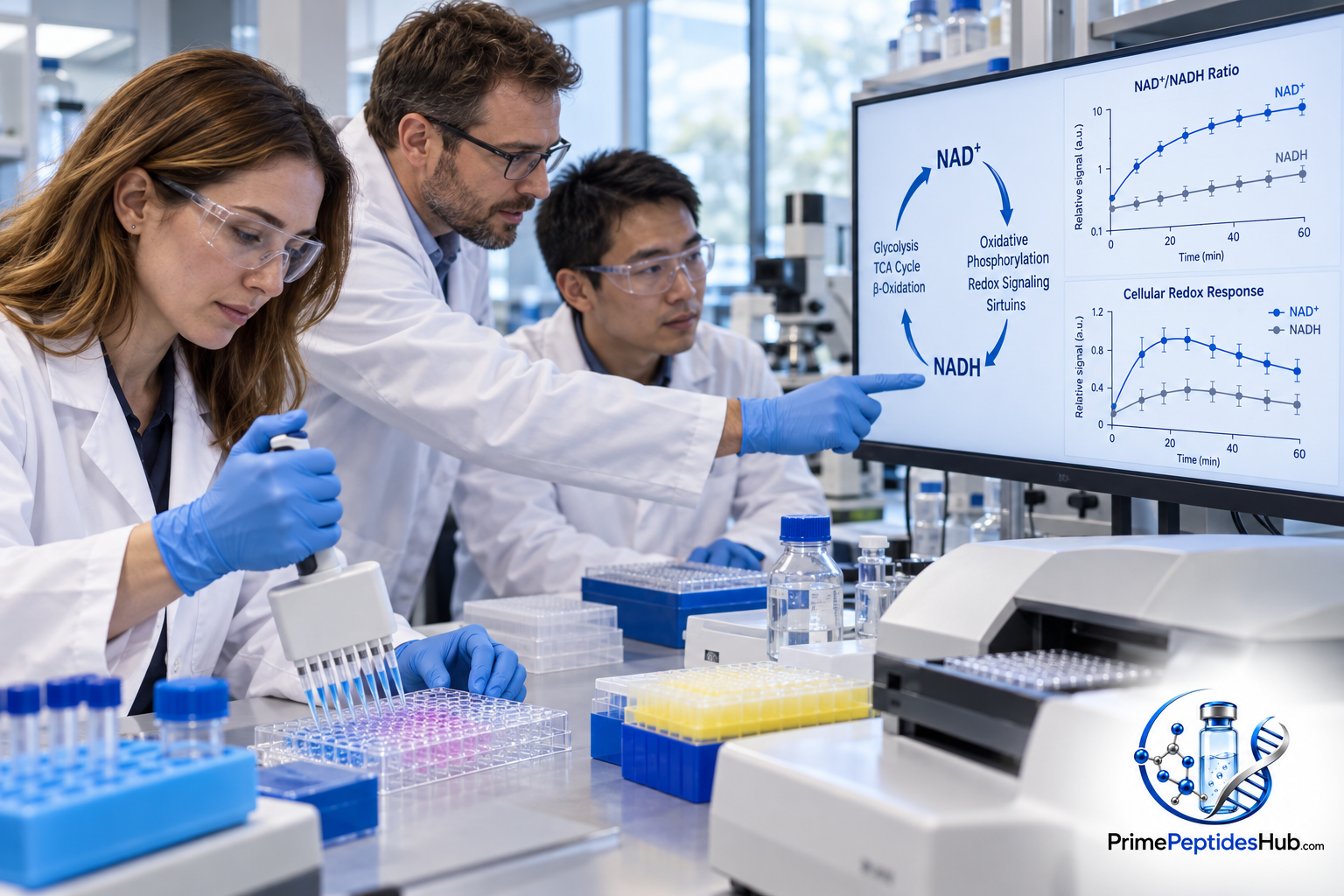
During glycolysis, the tricarboxylic-acid cycle, fatty-acid oxidation, and amino-acid metabolism, enzymes transfer electrons to NAD+, producing NADH. Mitochondrial electron transport then uses electrons from NADH to help generate the proton gradient that supports ATP synthesis. NAD+ must be regenerated continually; otherwise many oxidation reactions would slow even when nutrients remain available.
The NAD+/NADH ratio requires careful interpretation. Tissue extraction may combine cell types and compartments, while production, consumption, oxygen, mitochondria, and sample handling can alter the result. It is not a stand-alone “cellular energy” score, and blood measurements cannot automatically represent other tissues.
How do cells make and recycle NAD+?
Mammalian cells obtain NAD+ through several routes. The de novo pathway begins with tryptophan. The Preiss–Handler pathway uses nicotinic acid, while salvage pathways recycle nicotinamide or use precursors such as nicotinamide riboside, abbreviated NR, and nicotinamide mononucleotide, abbreviated NMN. Enzymes, precursor availability, dietary context, cellular stress, and tissue type influence the contribution of each pathway.
Salvage is especially important because NAD+-consuming reactions release nicotinamide that can be recycled. NAMPT converts nicotinamide toward NMN, and NMNAT enzymes convert NMN to NAD+. These reactions occur within organized cellular compartments rather than one freely mixed pool. The nucleus, cytosol, and mitochondria maintain connected yet partly distinct NAD systems, so an increase measured in one location may not occur equally elsewhere.
Why is NAD+ consumed by signaling enzymes?
Sirtuins use NAD+ during protein deacylation and produce nicotinamide plus an ADP-ribose product. PARP enzymes consume NAD+ when building ADP-ribose chains during responses that include DNA damage. CD38 is a major NAD glycohydrolase and also participates in calcium-related signaling. These enzyme families connect NAD availability with gene regulation, stress responses, inflammation, repair pathways, and metabolic adaptation.
“Activating sirtuins” is an oversimplification. Seven mammalian sirtuins occupy different compartments and targets. NAD+ availability is only one influence among substrate access, enzyme abundance, inhibitors, competing consumers, cellular state, and feedback. Changing an NAD-consuming enzyme may also alter functions beyond NAD concentration.
Does NAD+ decline with age?
Animal and human tissue studies report lower NAD-related measurements with aging or metabolic stress. Proposed contributors include reduced synthesis, increased CD38 activity, inflammation, DNA damage, circadian disruption, and mitochondrial dysfunction.
A cross-sectional difference does not prove that lower NAD+ causes aging. Cell composition, metabolism, activity, diet, medicines, and disease can affect NAD biology. Mechanistic studies therefore manipulate synthesis or consumption and test whether predicted pathways and functional endpoints change together.
What have preclinical studies shown?
Cell and rodent experiments have increased NAD availability using genetic changes, enzyme inhibition, NR, NMN, nicotinamide, or other interventions. Some models reported changes in mitochondrial function, glucose handling, muscle performance, vascular measures, inflammation, or resilience to metabolic stress. For example, a 2012 mouse study found that NR increased tissue NAD+ and altered oxidative metabolism under its dietary protocol.
A mouse study linked age-related CD38 activity with lower NAD+ and mitochondrial changes. These experiments clarify pathways, but species, exposure, diet, age, sex, genetics, and laboratory conditions shape outcomes. Rodent findings cannot directly establish human effectiveness, longer life, or rejuvenation.
What have human precursor trials found?
Human research focuses mainly on precursors rather than supplied NAD+ itself. Trials show that NR or NMN can alter selected NAD-related metabolites in blood and sometimes tissue. A 2018 crossover trial found that NR increased blood measures, while exploratory physiological outcomes were mixed.
Results are not uniform. In obese, insulin-resistant men, twelve weeks of NR did not improve insulin sensitivity, glucose metabolism, energy expenditure, lipid oxidation, or body composition despite acceptable short-term safety findings. A later trial in postmenopausal women with prediabetes reported improved muscle insulin sensitivity after NMN, but not all whole-body outcomes changed. Different compounds, populations, durations, endpoints, and analytical methods prevent simple pooling into one promise.
NAD+ itself is not the same as NR or NMN
NR and NMN are biochemical precursors that cells process through specific pathways. NAD+ is the completed dinucleotide and has different size, charge, stability, transport, and extracellular metabolism. Evidence that a precursor raises a blood metabolite cannot validate an NAD+ preparation, and evidence about externally supplied NAD+ cannot be assigned to NR or NMN. Chemical names and tested materials must remain explicit.
Direct NAD+ claims are difficult to evaluate because formulation, purity, degradation, exposure, and measurement timing matter. Extracellular enzymes may transform NAD+ before cellular use, and downstream metabolites do not prove intact delivery into a particular intracellular compartment. Controlled evidence remains limited.
Can NAD+ research prove anti-aging or performance benefits?
No NAD measurement establishes biological age, and raising it has not been shown to reverse human aging. Longevity cannot be inferred from short biomarker studies. Fatigue, cognition, performance, recovery, immunity, weight loss, and “detoxification” are separate outcomes requiring adequately powered trials.
What are the main safety uncertainties?
Short precursor trials do not define lifetime safety, rare events, interactions, pregnancy effects, or consequences in complex disease. NAD-consuming pathways participate in immunity, DNA-damage responses, survival, and cancer biology. This does not show that increasing NAD causes cancer; it shows that context matters.
Safety data cannot be transferred among NAD+, NR, NMN, nicotinamide, mixtures, or different routes. Formulation and impurities introduce separate questions. A research-only laboratory material is not characterized for ingestion, injection, infusion, topical application, or human or veterinary use.
Why analytical identity matters
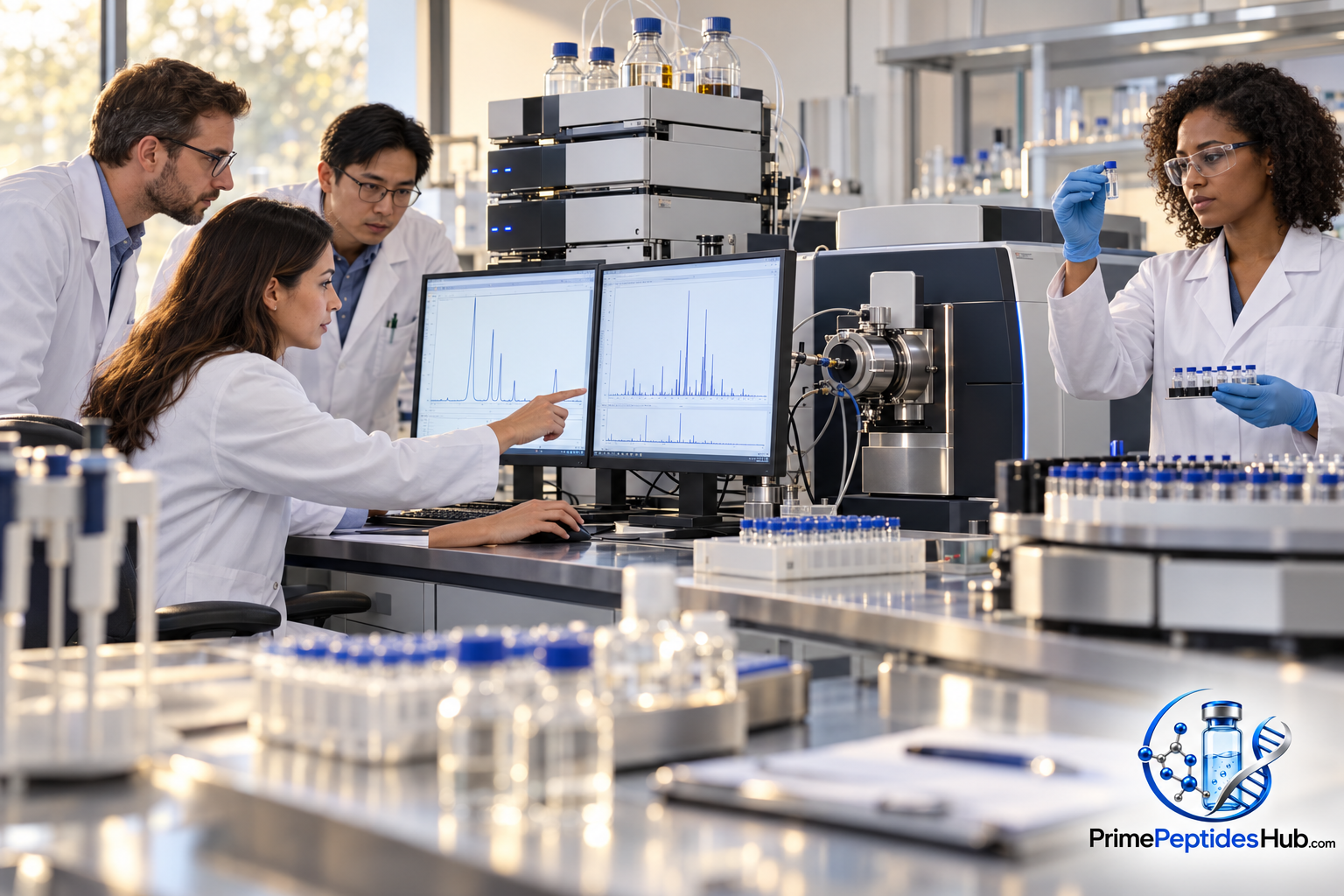
NAD+ can degrade chemically and enzymatically, and its redox state matters. Analysis may examine identity, assay, NADH, related nucleotides, nicotinamide, water, counterions, solvents, microbial quality, endotoxin, and stability. Chromatographic purity alone does not prove identity, concentration, redox form, or experimental suitability.
Mass spectrometry, chromatography, ultraviolet detection, nuclear magnetic resonance, enzymatic assays, or combinations may support characterization when methods are fit for purpose. Sampling, extraction, temperature, light, pH, freeze–thaw history, and analysis delay can change NAD metabolites. The NAD+ research listing should be evaluated by its stated specification and batch records rather than by product name alone.
Research materials are not finished medicines
A laboratory NAD+ material is not automatically an approved medicine, sterile product, dietary supplement, diagnostic, cosmetic ingredient, or clinical-trial material. Each category requires appropriate manufacturing controls, release tests, stability programs, microbial or sterility assurance where applicable, regulatory oversight, and evidence matched to a defined use. A familiar endogenous molecule can still be unsuitable for an unvalidated application.
Qualified laboratories should define the exact analyte, matrix, controls, storage, handling, acceptance criteria, sampling schedule, and statistical plan before beginning work. Results should separate NAD+, NADH, precursors, degradation products, compartment-specific measurements, pathway markers, and functional endpoints. The research catalog lists materials individually, while research categories organize navigation rather than prove effectiveness or compatibility.
Why batch documentation matters
A useful Certificate of Analysis identifies the exact chemical name, form, formula, molecular mass, counterion, batch or lot, methods, specifications, measured results, laboratory attribution, and report date. Generic certificates, mismatched lots, reused chromatograms, missing sample identifiers, or unexplained methods weaken confidence. The PrimePeptidesHub quality certificates page explains document organization, and the quality commitment describes the site’s approach to traceability and transparency.
Key takeaway
NAD+ is an essential cellular coenzyme and signaling substrate, not a peptide. Research has established its central roles in redox metabolism and in reactions involving sirtuins, PARPs, CD38, and other enzymes. Cell and animal studies support important hypotheses about metabolic stress and aging, while human precursor trials confirm that some NAD-related blood or tissue measures can be altered.
Evidence does not establish NAD+ as a universal anti-aging, energy, cognitive, metabolic, immune, recovery, or performance treatment. NAD+ and its precursors are not interchangeable, and biomarkers are not clinical outcomes. Evaluation must match each claim to the tested material, route, population, comparator, duration, compartment, and endpoint.